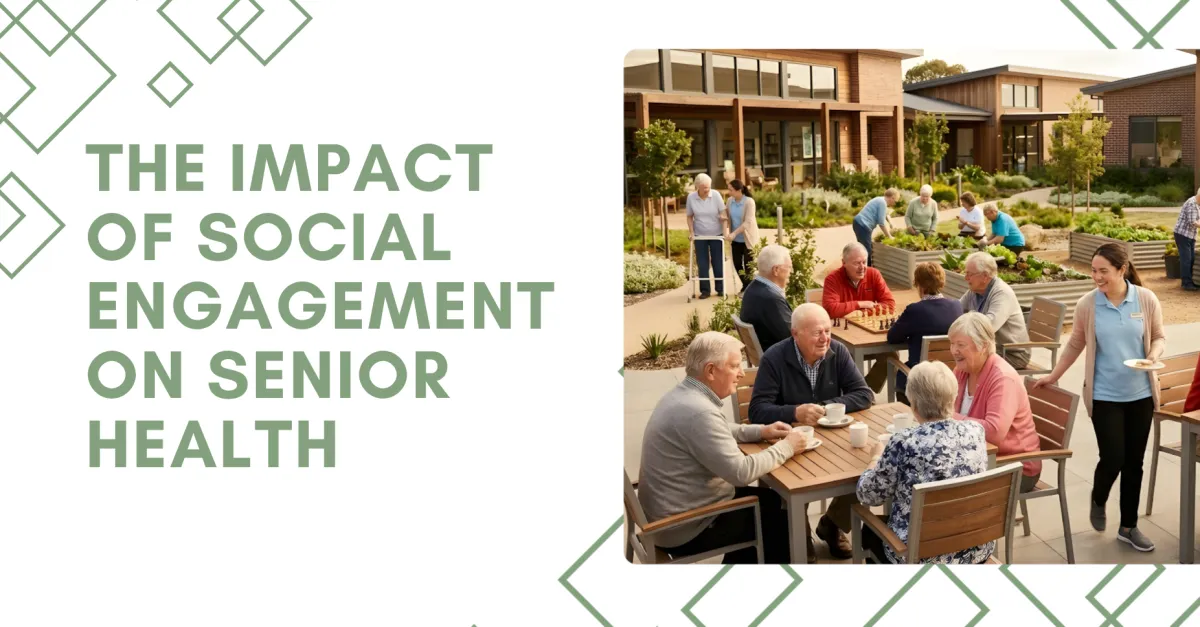
The Impact of Social Engagement on Senior Health
Introduction
In the medical world, we often focus on physical metrics like blood pressure and mobility. However, research increasingly shows that social isolation can be as damaging to a senior’s health as smoking 15 cigarettes a day. Loneliness is a silent epidemic among the elderly, often leading to rapid cognitive decline and physical frailty. At The Walnut Villa, social engagement isn't just a "perk"—it is a core component of our clinical care strategy.
The Holistic Benefits of Connection
Socialization at The Walnut Villa and The Heights Inn isn't just a leisure activity; it is a clinical intervention that affects nearly every system in the body. When seniors engage with a vibrant community, they experience:
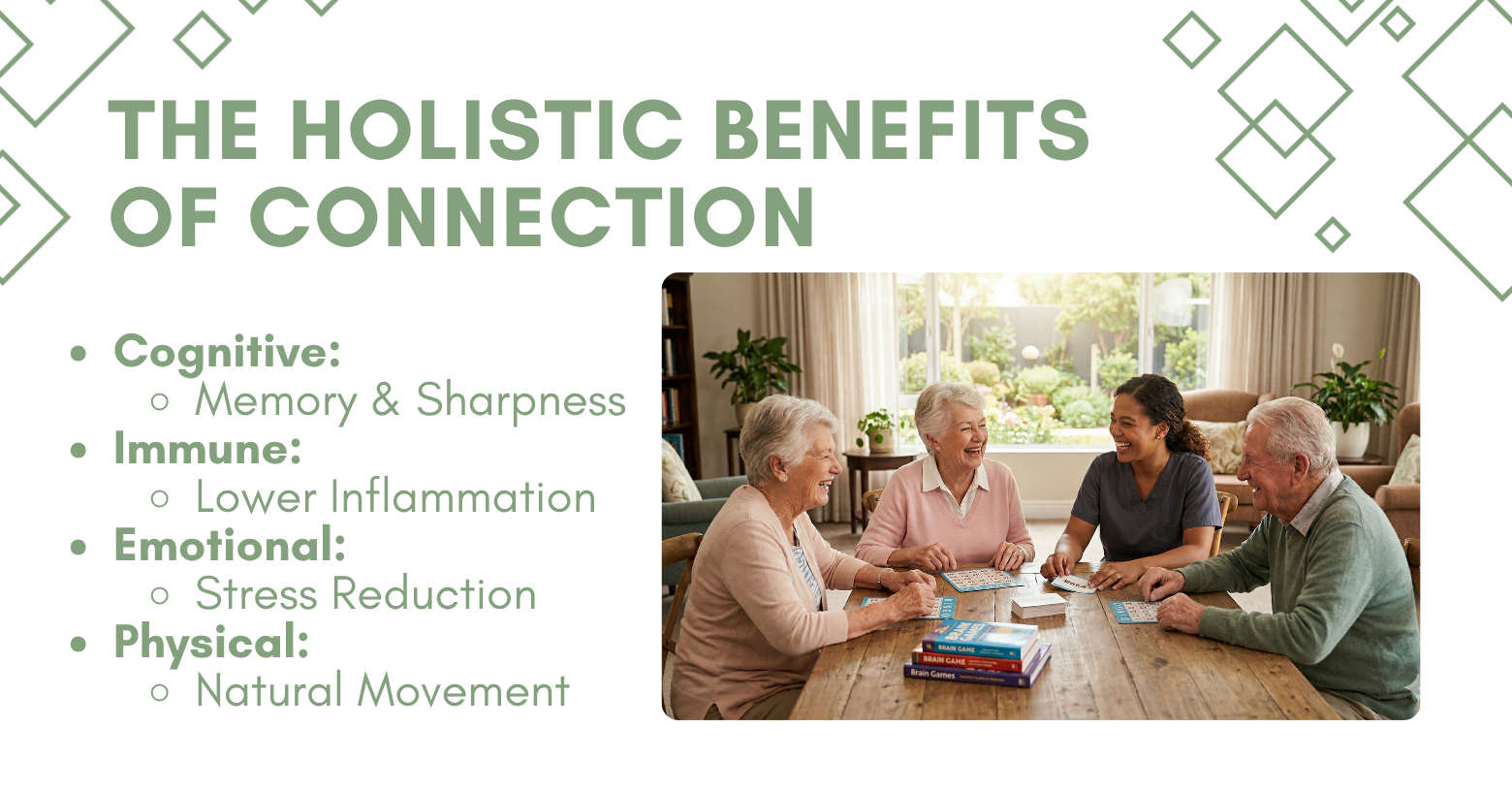
Cognitive Sharpness: Conversations require "active listening" and rapid-fire responses, which provide a high-intensity workout for the frontal lobe. Engaging in group trivia or memory games challenges cognitive processing and helps delay decline.
Immune System Support: Strong social ties are biologically protective. Research suggests that seniors with consistent social interaction exhibit lower levels of systemic inflammation and more robust immune responses to viruses.
Emotional Resilience: Sharing a laugh or a story with a peer significantly reduces cortisol (the stress hormone). This is vital for residents navigating life transitions, such as the loss of a spouse or changes in physical mobility.
Physical Motivation: Socializing naturally drives movement. The desire to walk to the dining room to join friends or participate in a group stretch session keeps joints limber and muscles active through "stealth exercise."
Creating "Organic" Social Moments
In a sprawling, institutional facility with hundreds of residents, it is tragically easy for a quiet or introverted senior to "disappear" into the background. In these large environments, socialization is often forced into rigid "activity blocks" that can feel more like an obligation than an opportunity. At The Walnut Villa, we’ve replaced the sterile recreation room with the natural warmth of a family home, where every resident is a visible, valued, and vital part of the group.
We focus on "Organic Socialization"—the kind of moments that happen naturally in a household rather than on a clipboard. By maintaining a 6-resident limit, we ensure that no one sits alone in the shadows. We facilitate daily rhythms that mirror a life well-lived:
The Morning Coffee Klatch: Our dining table serves as the "town square." Over steaming mugs of coffee and fresh pastries, residents gather to discuss the morning news, local La Habra Heights events, or shared memories. This isn't just "passing time"; it is a vital cognitive exercise that keeps the mind engaged with the world.
Music & Reminiscence Therapy: Music has a unique way of bypassing cognitive barriers. Whether it’s a spontaneous sing-along to a favorite classic or listening to the crackle of a vintage record, these moments spark "reminiscence therapy." Sharing a song often leads to sharing a story, bridging the gap between a resident’s past and their current companions.
Garden Socials & Al Fresco Living: We take full advantage of the Southern California sunshine. Our secure outdoor patios and garden spaces aren't just for looking at; they are active social hubs. Whether it’s potting a new plant together or simply enjoying the breeze, nature acts as a natural de-escalator for stress and a catalyst for easy conversation.
The Caregiver as a Social Bridge
In a typical assisted living facility, the relationship between staff and resident is often transactional: "Did you take your pills? Did you eat your lunch?" At The Walnut Villa, our 1:3 staff-to-resident ratio allows our caregivers to be more than just medical assistants—they are social companions and historians.
Our staff makes it a priority to know the "Deep Story" of every resident: their former careers, their favorite black-and-white movies, the names of their grandchildren, and even their favorite jokes. This knowledge allows the caregiver to act as a "Social Bridge."
If a caregiver knows that Arthur was a civil engineer and Maria was a school teacher with an interest in architecture, they can subtly initiate a conversation between the two. By providing these conversational "on-ramps," our staff helps foster deep, authentic friendships that might never have happened in a larger, more anonymous setting. We don't just provide care; we curate a community.
Conclusion
At the end of the day, health is about more than just a stable heart rate or a managed medication list; it’s about the quality of the human connections we maintain. Choosing a boutique community that prioritizes social well-being isn't just a lifestyle choice—it’s a health decision.
At The Walnut Villa, we save lives by ending the silence. We ensure that your loved one isn't just "placed" in a room, but is invited into a family where they are known, heard, and celebrated every single day.

Facebook
Instagram