
Fall Prevention and Environmental Safety Architecture
Introduction
As seniors age, a single fall can dramatically alter the trajectory of their independence, often triggering a compounding cycle of physical decline and emotional anxiety. In traditional multi-story residential properties, hidden architectural hazards—ranging from deep, steep staircases to deceptively high thresholds—create a high-risk landscape for aging bodies.
At The Walnut Villa, we believe that true safety does not mean restricting movement or confining a senior to a bed or wheelchair; instead, it means engineering an environment where active movement is inherently safe. Our residential care home is built from the ground up using proactive, invisible safety architecture. This design approach is meticulously engineered to dramatically reduce fall risks while fiercely preserving a resident's freedom to explore, wander, and engage with their surroundings.
Engineering a Fall-Resilient Environment

Large institutional facilities often rely on stark, clinical modifications. Things like cold, stainless-steel industrial handrails, stark fluorescent lighting, and echoing corridors constantly remind residents of a hospital setting. We take a fundamentally different approach. We seamlessly blend advanced safety mechanics directly into a warm, familiar, residential boutique layout. This ensures that clinical-grade safety coexists beautifully with the comfort of a true home.
Zero-Threshold Flooring: Transition zones are primary danger areas for minor stumbles that can lead to major fractures. Throughout our entire home, transitions between communal rooms, carpeted private bedrooms, and tiled master bathrooms are engineered to be completely flush. Eliminating the standard 0.5-inch transition lip entirely removes a major tripping hazard for seniors who utilize walkers, rely on canes, or struggle with a shuffling gait.
Invisible Grip and Support: Instead of installing institutional grab bars that ruin the residential feel of the home, our weight-bearing handrails are seamlessly integrated directly into custom wood wainscoting along our hallways. To the naked eye, it looks like elegant, high-end architectural home molding. To a senior resident traversing the villa, it provides a sturdy, continuous, and highly reliable anchor point for physical balance.
Smart Lighting Pathways: A high percentage of senior falls occur during midnight bathroom visits when spatial disorientation is high. To combat this, we utilize low-voltage, motion-activated LED baseboard lighting. These smart pathways softly illuminate the direct floor line from the edge of the bed to the bathroom. By casting light downward, we prevent the harsh visual glare or blinding shadows that disturb sleep cycles or trigger visual hallucinations in dementia residents.
Shock-Absorbing Underlayments: Beneath our beautiful residential-style flooring lies a high-tech, medical-grade shock-absorbing underlayment. While the surface looks like traditional hardwood, the micro-cushioning underneath is designed to yield slightly under sudden impacts, drastically reducing the physical force exerted on senior bones and hips in the unexpected event of a stumble.
The Role of High Staff-to-Resident Ratios
Hardware and smart architecture alone cannot prevent every fall; human vigilance and proactive proximity are the ultimate safety nets. In a sprawling, "big box" institutional facility, a single caregiver might be assigned to oversee 15 to 20 residents simultaneously. In those corporate environments, a vulnerable senior may wait 20 minutes or more after pressing a call button before receiving physical assistance to simply stand up from a chair or bed. This long wait often prompts them to try transferring by themselves, which frequently leads to an avoidable fall.
The Caregiver As An Escort: Because we operate as an intimate micro-community with an exceptionally high staff-to-resident ratio, our dedicated team is always close by. This layout allows for constant, passive, and non-invasive supervision. Caregivers are always positioned within striking distance to offer a steady, reassuring hand before a resident attempts a risky physical transfer alone. This transforms potentially hazardous movements into smooth, supported, and completely dignified daily transitions.
Physical Therapy and Balance Maintenance

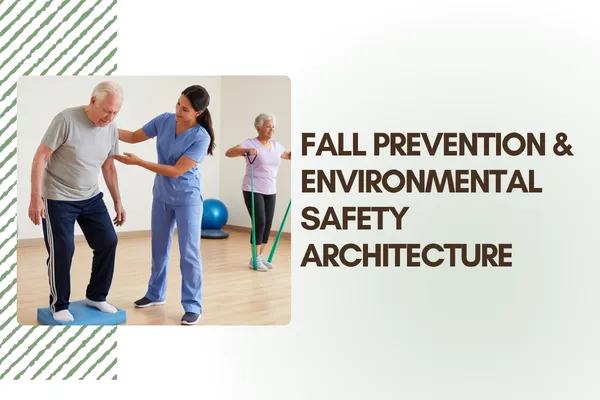
We don't simply wait for an accidental fall to happen before we address a senior's balance and lower-body strength. Our comprehensive care plans treat mobility preservation as an active daily practice, ensuring that muscles remain engaged and joints remain flexible.
Strength and Gait Assessments: We host regular, proactive reviews conducted by visiting physical therapists to meticulously spot subtle changes in a resident's stride, pace, or weight distribution.
Functional Balance Exercises: We integrate gentle, structured physical movements directly into our daily recreational activities. These include low-impact seated stretches, core stabilization movements, and coordination games designed to maintain essential lower-body strength.
Adaptive Equipment Tuning: Our clinical team continuously monitors and inspects walkers, rollators, and canes. This ensures all mobility aids are properly fitted to the resident’s current height, that rubber tips are replaced before losing traction, and that brakes function flawlessly.
Conclusion
Safety should never feel like an unyielding prison or a clinical restriction of personal freedom. By blending state-of-the-art architectural safety directly into a traditional, elegant home layout, we effectively remove the deep-seated fear of falling that keeps so many seniors sedentary. In its place, we give them the confidence, autono

Facebook
Instagram