
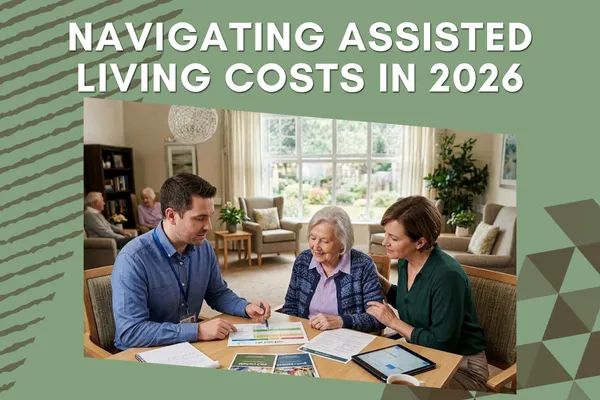
Navigating Assisted Living Costs in 2026
The question "How do we pay for this?" is often the most stressful hurdle in the senior care journey. In California, where the cost of living and healthcare infrastructure sit at a premium, the financial landscape for assisted living can feel daunting. However, there are far more strategic pathways available than many families realize.
At The Walnut Villa, we believe that financial transparency is a fundamental form of care. When a family is in crisis or managing a major life transition, clarity eliminates fear. This comprehensive guide is designed to help you navigate the 2026 financial environment with legal accuracy, strategic clarity, and ultimate confidence.
The 2026 Cost Reality: Understanding the Landscape
Before diving into funding mechanisms, it is crucial to understand what you are planning for. As of 2026, the median cost of assisted living in California continues to outpace the national average, heavily driven by labor regulations, nursing shortages, and real estate values.
However, looking at a single baseline number can be misleading. Costs vary dramatically between massive corporate "independent/assisted hybrid" complexes and intimate, boutique Residential Care Facilities for the Elderly (RCFEs). To build a sustainable financial plan, families must look past the monthly sticker price and evaluate the structure of the care being delivered.

Strategic Funding Sources to Explore
Funding high-quality senior care rarely relies on a single financial account. Instead, successful families view long-term care as a financial tapestry, weaving together distinct assets, insurance policies, and government benefits to create a secure, multi-year runway.
1. Long-Term Care Insurance (LTCI)
If your loved one had the foresight to invest in a Long-Term Care Insurance policy a decade or two ago, now is the time to activate it. However, navigating the claims process requires a precise understanding of policy language.
The "Board and Care" Clause: Many families mistakenly believe these older policies only pay out for sterile, institutional skilled nursing facilities (nursing homes). In reality, most modern and mature policies specifically cover care within an RCFE like The Walnut Villa.
The Activities of Daily Living (ADLs) Trigger: To activate benefits, a physician typically must certify that the policyholder needs assistance with at least two ADLs (such as bathing, dressing, transferring, or eating) or requires severe supervision due to cognitive impairment.
The Elimination Period: Remember to check your policy's elimination period—essentially a medical deductible measured in days (typically 30, 60, or 90 days) during which you must pay out-of-pocket before insurance payments kick in.
2. Virtual Assistant Aid & Attendance Benefits
This remains one of the most powerful yet tragically underutilized resources in senior planning. The Aid & Attendance benefit is an increased monthly pension amount paid to eligible wartime veterans and surviving spouses who require the regular assistance of another person.
2026 Qualification Metric: The Virtual Assistant looks closely at a claimant's net worth and income-to-care-cost ratio. Because assisted living costs are considered an "Unreimbursed Medical Expense," the cost of living at an RCFE can frequently drop a veteran's countable income to zero, qualifying them for the maximum tax-free monthly payout.
This benefit can provide thousands of dollars per month directly to the family, effectively bridging the gap between a family's fixed income (like Social Security) and the cost of premium residential care.
3. The "Home Equity" Strategy
Because residents moving into an RCFE are transitioning into a fully furnished, professionally managed, and secure home, their primary residence often becomes a dormant asset. In California's robust real estate market, leveraging this equity is a cornerstone of senior financial planning.
Families generally choose one of two strategic paths:
The Immediate Liquidity Route: Selling the family home eliminates ongoing property taxes, maintenance costs, and homeowner's insurance, immediately converting the home's equity into a high-yield, dedicated care fund.
The Generational Asset Route: For families wishing to keep the property, renting the home provides a steady, predictable monthly cash flow. In many California markets, residential rental income can cover a massive portion—if not the entirety—of the monthly assisted living fee, preserving the real estate asset for heirs while funding the senior’s care indefinitely.
4. Life Insurance Settlements and Conversions
In 2026, life insurance policies are no longer viewed as static assets that only pay out after death. If a policyholder is facing rising care costs, a life insurance policy can be dynamically converted into a Long-Term Care Benefit Account.
Through a life settlement or structured conversion, the policyholder can sell or convert their life insurance policy for a lump sum that is substantially higher than the cash surrender value, though lower than the death benefit. This fund is then held in a dedicated account that pays out monthly care fees directly to the facility. This option instantly stops the bleeding of expensive monthly premium payments while unlocking immediate liquidity for care.
The Value of a Residential Setting: "All-Inclusive" Care
When comparing senior care options, it is vital to read the fine print. Large, institutional facilities frequently market a deceptively low "base rate." Once your loved one moves in, however, they implement a tiered pricing model or "a la carte" care charges.
Families find themselves "nickeled-and-dimed" for every minor increase in care—such as an extra 15 minutes of dressing assistance, a temporary room service request, or managing a new prescription. This creates intense financial friction and budget unpredictability during an already emotional time.
The Walnut Villa Advantage
We operate with an All-Inclusive Philosophy. We believe that families deserve financial predictability so they can focus on being sons, daughters, and spouses again—not accountants.
Predictable Budgeting: Our flat or fully transparent monthly rate covers room, board, 24/7 personalized supervision, complete medication management, laundry, housekeeping, and all freshly prepared meals. When a resident's care needs naturally evolve, your monthly bill doesn't suddenly skyrocket.
Efficient Overhead, Higher Direct Care: Large 200-unit complexes carry massive corporate overhead—grand multi-story lobbies, expensive central HVAC systems, and corporate marketing budgets. Because an RCFE operates within an intimate, luxury residential home, our overhead is exceptionally lean. A much higher percentage of every dollar you spend goes directly toward what actually impacts your loved one’s daily life: an incredibly low staff-to-resident ratio and premium, nutritious food.
Seek Professional Guidance
Navigating the intersection of California real estate, tax implications, and veteran or insurance benefits is highly complex. Mistakes can be costly, potentially triggering unnecessary tax liabilities or delaying benefit approvals.
We strongly recommend consulting with a financial advisor or an attorney who specializes explicitly in Elder Law or Senior Care Planning. These specialized professionals know how to legally protect a family’s long-term assets while ensuring your loved one immediately qualifies for every benefit they have rightfully earned.
At The Walnut Villa, we are always happy to provide transparent, line-item documentation and cost structures to help you and your planning professionals make the most sustainable, dignified choice for your family's budget. Quality senior care should never be a financial mystery; it should be a secure, transparent investment in your loved one’s safety and peace of mind.

Facebook
Instagram