
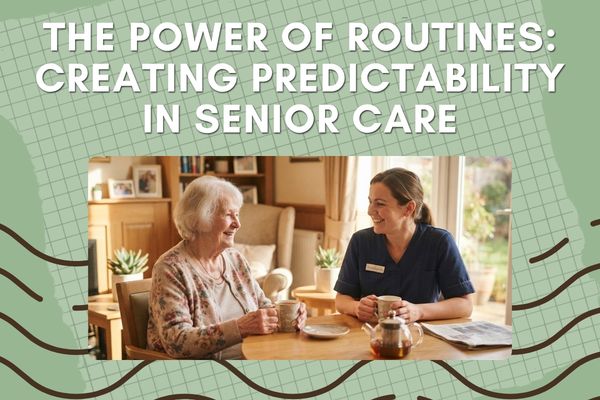
The Power of Routines: Creating Predictability in Senior Care
For an aging brain, navigating an unpredictable environment can be an ongoing, exhausting source of cognitive stress. When an older adult is constantly left wondering when their next meal will arrive, who might walk through their door next, or what sequence of events the day holds, their nervous system is subtly forced into a state of low-grade, persistent anxiety. They spend precious mental energy trying to piece together time and space.
At The Walnut Villa, we harness the deeply stabilizing power of structured daily routines to combat this hidden exhaustion. Far from being rigid, cold, or institutional, a thoughtfully personalized daily rhythm serves as a reliable emotional anchor. It gives residents a profound sense of personal control, psychological safety, and enduring peace of mind.
The Neurological Benefits of a Structured Day
As cognitive processing speeds naturally slow down with age, keeping track of time, managing complex schedules, and anticipating daily shifts requires a substantial amount of mental energy. A predictable routine effectively automates these routine daily decisions, preserving precious cognitive resources that can instead be channeled into socialization, creative hobbies, and genuine enjoyment of life.

Lowering Cortisol and Balancing the Circadian Rhythm: When daily milestones—such as waking up, mealtimes, medication windows, and afternoon activities—occur within a reliable timeframe each day, the body's internal biological clock stabilizes. This predictability helps regulate cortisol (the stress hormone) levels, preventing the spikes of panic or confusion that often accompany erratic schedules.
Supporting Memory Through Habit and Procedural Muscle Memory: For many residents dealing with short-term memory challenges, declarative memory (the memory of facts and events) may fade, but procedural memory (muscle memory and deeply ingrained behavioral habits) often remains remarkably intact. Waking up to familiar morning sounds, sitting in a designated dining spot, and following a consistent sequence of events allows habits to take over smoothly where cognitive memory leaves off, reducing frustration.
Understanding "Sundowning" and the Value of Predictability
One of the most challenging phenomena in senior care, particularly for those with Alzheimer’s or dementia, is late-afternoon restlessness often referred to as "sundowning." As daylight fades and shadows lengthen, disorientation spikes.
A structured daily routine acts as a powerful buffer against sundowning. When the late-afternoon hours are consistently met with a calming, predictable ritual—such as a warm cup of herbal tea, soft lighting, and familiar background music—the brain receives environmental cues that ease the transition from day to night. This eliminates the fear of the unknown that typically triggers late-day agitation.
Balancing Structure with Personal Agency
While large institutional facilities often enforce rigid, sweeping schedules to accommodate hundreds of patients at once, our boutique micro-community adapts dynamically to the individual. Our routines are structured for clarity, but they remain deeply personalized to fit a lifetime of habits.
The Gentle Awakening: We do not wake residents up with loud shift changes, overhead pages, or rigid breakfast cut-off times. If a resident has spent their entire adult life waking up leisurely at 8:00 AM with a cup of coffee and the morning paper, our care plan honors that history. Consistency looks different for every individual, and honoring their unique clock preserves their dignity.
Anchored Activity Transitions: We wrap our daily activities around natural, predictable human anchors. For instance, a light physical stretch or gentle walk always follows morning coffee; a mid-afternoon social hour follows a post-lunch rest; and a soothing acoustic music session or reading hour always precedes evening rest. These gentle environmental cues signal transitions well in advance, eliminating the friction and resistance that sudden changes can cause.
The Ripple Effect on Caregivers and Families
The benefits of a predictable routine extend far beyond the resident—they deeply impact the care team and visiting family members, too. When family members visit a loved one whose day has a predictable rhythm, they find a resident who is calmer, more communicative, and more present.
For the care staff, a shared, predictable framework reduces guesswork. Caregivers can focus less on managing crisis-level behavioral outbursts and more on building meaningful, joyful human connections. Predictability creates a harmonious atmosphere where everyone—residents, staff, and family—feels safe, synchronized, and respected.
Conclusion
A life with a clear, comforting rhythm is a life characterized by significantly less anxiety and far more grace. By wrapping our residents in a predictable, thoughtfully designed daily routine, we create a secure psychological foundation. From this place of deep stability, they are truly free to relax, find joy, and make the most of their retirement years.

Facebook
Instagram