
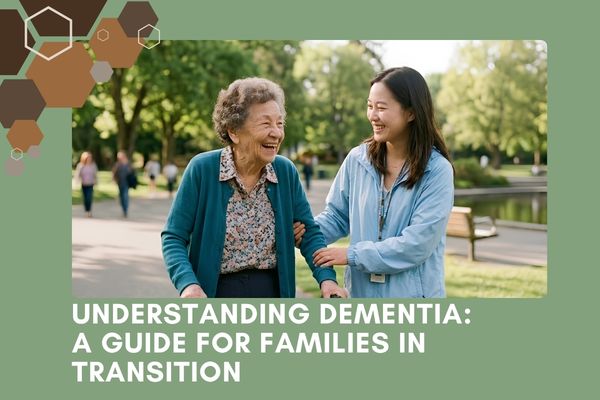
Understanding Dementia: A Guide for Families in Transition
A diagnosis of dementia or Alzheimer’s is a significant life transition for the entire family, often bringing a complex mix of emotions and practical challenges.
At The Walnut Villa, our approach to memory care focuses on meeting residents exactly where they are today. By shifting the perspective toward meaningful, daily connection, we aim to provide a supportive environment where families can navigate this chapter with dignity and peace.
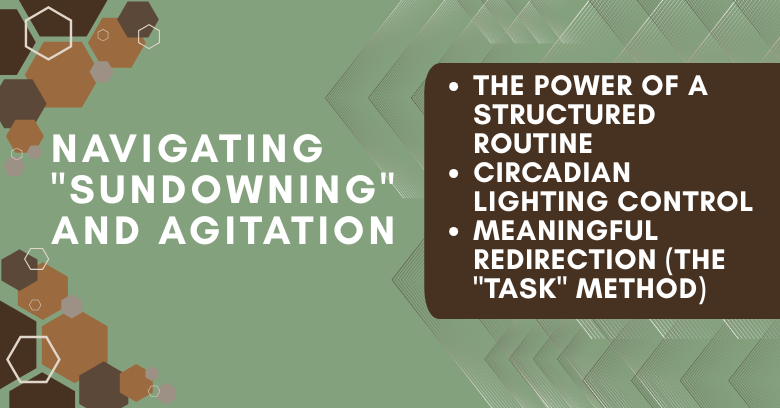
Navigating "Sundowning" and Agitation
Many families find the late afternoon and early evening to be the most challenging time of day. This phenomenon, known as "Sundowning," involves increased confusion, anxiety, or irritability as daylight fades. This is a neurological response to a fading "internal clock," and we manage it through a multi-sensory approach:
The Power of a Structured Routine: For a brain struggling with memory, the "new" is terrifying. Predictable patterns—having tea at the same time, a familiar song playing at 4:00 PM—provide a biological "safety net" that reduces baseline anxiety.
Circadian Lighting Control: We utilize soft, warm lighting in the evenings to mimic a natural circadian rhythm. Avoiding harsh, blue-spectrum overhead lights helps the brain transition naturally toward rest and reduces the shadows that often trigger visual hallucinations or fear.
Meaningful Redirection (The "Task" Method): When a resident becomes agitated, we don't argue with their reality. Instead, we engage them in a familiar, tactile task. Folding warm towels, sorting buttons, or leafing through a high-contrast photo album can gently ground a resident in a sense of purpose and calm.
Communication Tips for Families: The Validation Method
One of the hardest adjustments for families is learning how to speak to a loved one whose reality has shifted. We teach our families "The Validation Method." Instead of correcting a lapse in memory—which often causes immediate shame and defensive withdrawal—we validate the emotion behind the statement.
The Instinctive Correction (To be avoided): "No, Mom, Dad passed away ten years ago. You’re forgetting again."
The Validation Approach: "It sounds like you're really thinking about Dad today; you must miss him. What was your favorite thing about the trips you used to take together?"
By leaning into the feeling rather than the facts, you preserve the resident's dignity and keep the lines of communication open. You are no longer an "examiner" testing their memory; you are a companion sharing their heart.
The Safety and Simplicity of a "Small Scale" Home
For those with cognitive challenges, "bigger" is rarely "better." Large hallways, echoing lobbies, and complex elevator banks are neurologically taxing. In a high-traffic institution, a resident with dementia can easily become "lost in space," leading to a state of perpetual flight-or-fight.
Naturally Dementia-Friendly Layout: Our residential setting is inherently safer because it is easy to navigate and feels like a house. A resident can see the kitchen from the living room; they recognize the "path" to their bedroom. This environmental familiarity reduces the frequency of "exit-seeking" behavior.
Supervision Without Restraint: Our 24/7 specialized supervision ensures that wandering is managed safely and proactively. Because our staff-to-resident ratio is so high, we can walk with a resident who is restless, ensuring they are safe without ever making them feel "locked in" or restricted.
Conclusion
Dementia changes the way a person interacts with the world, but it does not change their need for love, respect, and a sense of home. By choosing a memory-informed community, families can stop being "caregivers" burdened by tasks and return to being daughters, sons, and spouses again.

Facebook
Instagram